Takes the record as it is.
Upload clinical notes, lab reports, pathology, or chemotherapy orders as PDFs or images; paste free text; or send notes from another system through an interface.
03 / Current capability · Clinical trial matching
Clinical Trial Matching. Clinical decisions remain with the care team.
Clinical Trial Matching
Where it fits
Clinical context
The patient behind the decision
Supporting evidence
The rationale, with its sources
Coverage clarity
Requirements and unresolved gaps
Financial visibility
Expected costs and assumptions
Measurable outcomes
What happened after the decision
01 / What it does today
Upload clinical notes, lab reports, pathology, or chemotherapy orders as PDFs or images; paste free text; or send notes from another system through an interface.
Demographics, diagnosis and staging, biomarkers, treatment history, and performance status are drawn into one profile. Any field can be edited and the screen re-run.
Trials from partner networks, or a single named trial, are checked across 16 eligibility dimensions. Each criterion is shown as met, not met, or needing information, with its reasoning.
Single-trial and summary reports as PDFs, a one-click referral to the trial coordinator with the criteria attached, and a unique identifier for every screening run.
02 / Evidence and citations
Every criterion decision points back to the trial’s eligibility text and to the passage in the patient’s notes that supports it. When the notes do not contain the information, the criterion is marked as needing data rather than guessed.
Near-miss trials list their missing fields in order of impact, with the threshold that would qualify the patient, so the care team knows which question to answer next. Excluded trials state the criterion that excluded them.
Clinicians can report an incorrect match or exclusion from the screen. Those reports are reviewed and used to improve matching.
03 / What the clinician reviews
04 / Who it serves
Options that might otherwise go unmentioned reach the conversation with the care team, with the reasons a trial fits or does not fit spelled out.
Oncologists, nurses, and research coordinators screen from the notes they already have, resolve missing data, and refer in one step.
Trial options recorded beside the treatment rationale, so a coverage conversation can include the trial that was considered.
Research institutions, trial networks, and sponsors list trials; EHR and research platforms send notes and receive structured eligibility results through an interface.
05 / Example output

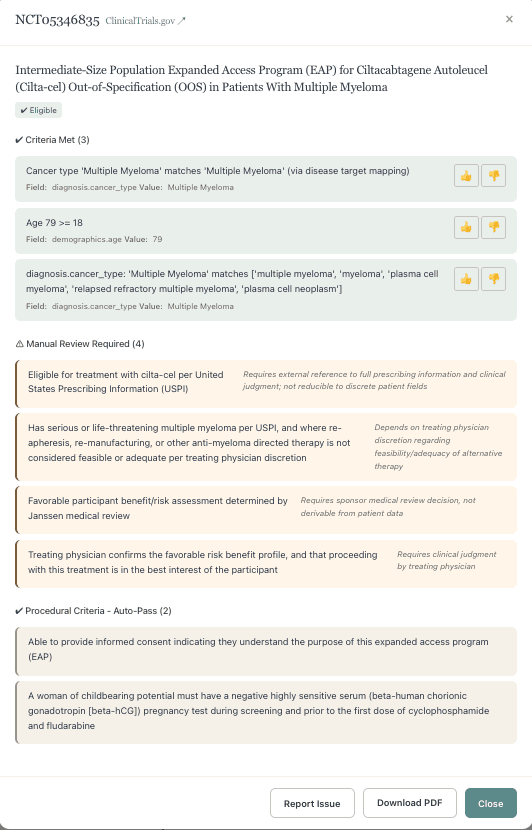
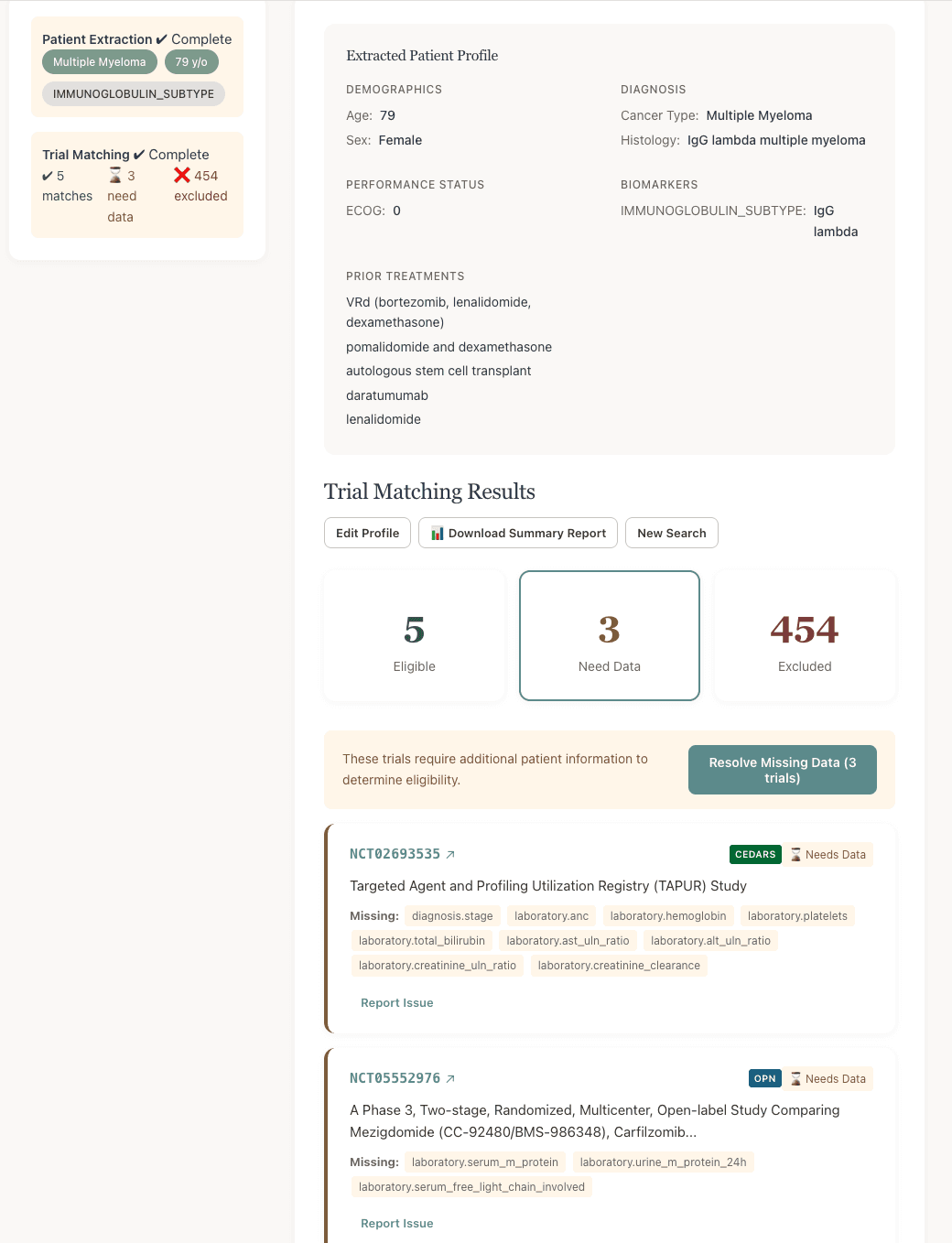
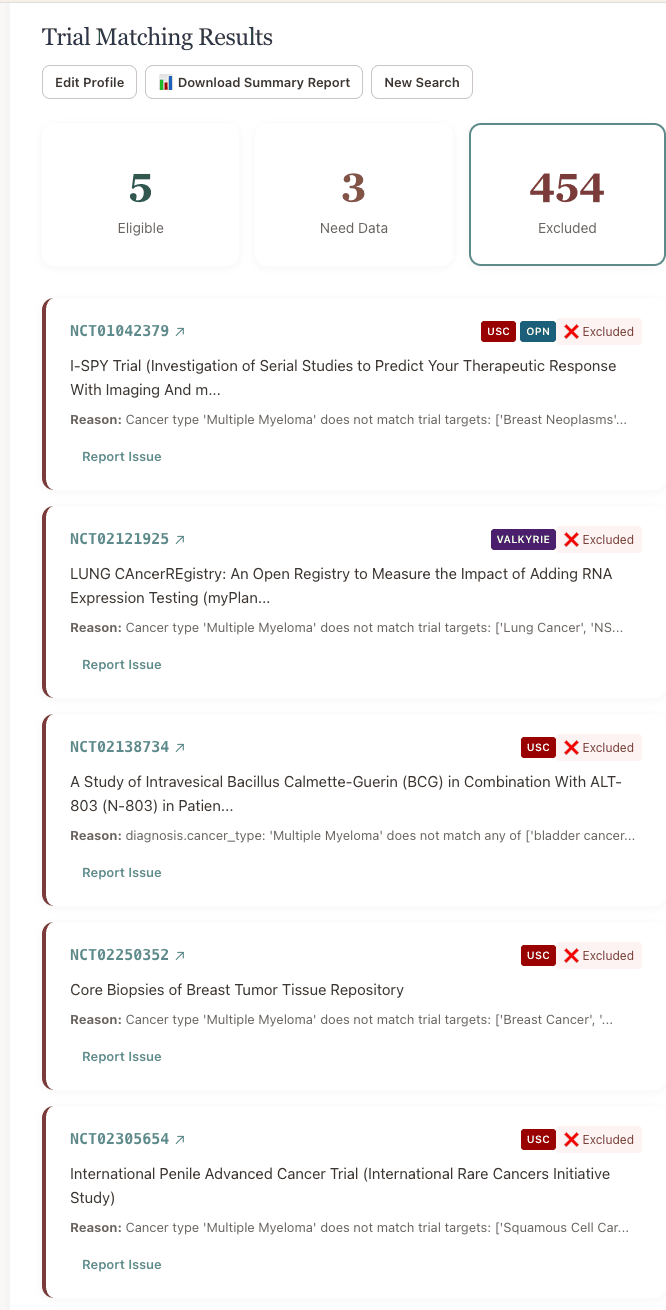
Screens show a fictional patient. No protected health information is included.
A shared ambition